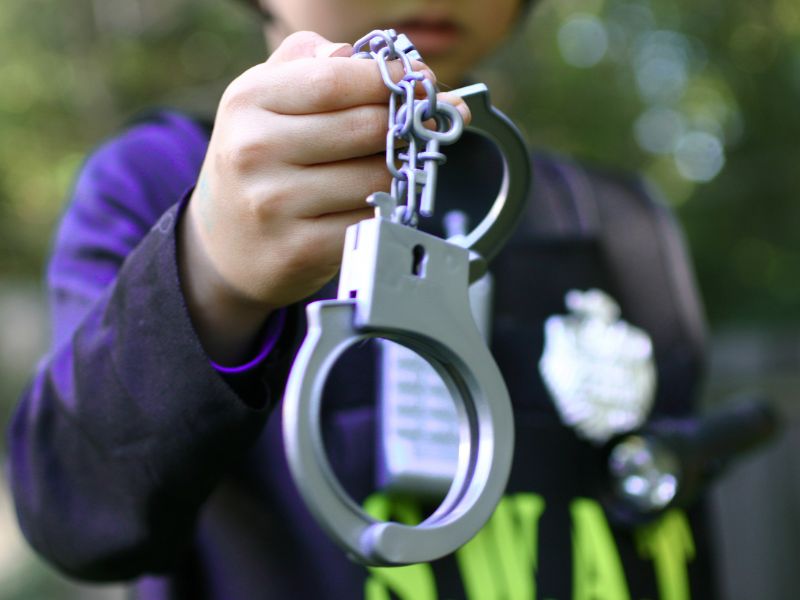
Knowing what is coming and what your options are allows you to help your child and take preventative measures so these crimes don’t happen again.
Table of Contents
When kids and teens are in legal trouble, the Maryland court tries them in juvenile court vs. criminal court. Through this court system, kids are encouraged or required to participate in rehabilitation programs, instead of facing a criminal record or jail time. The hope is that a mistake in their youth will not impact their future or be something they are forced to carry with them forever.
Nevertheless, it can be startling as a parent when your child is arrested and given a court date. For more serious offenses, such as crimes that result in serious injury or death, kids may be tried as adults. However, there are several common juvenile offenses that are most common in Baltimore juvenile courts. If your child is arrested for one of these offenses, there are options to avoid criminal charges or even an arrest record.
If your child is arrested for a common juvenile offense,contact Saller Law for legal representation. Knowing what is coming and what your options are allows you to help your child and take preventative measures so these crimes don’t happen again.
Disclaimer: articles on sallerlaw.com are not intended as legal advice and should not be taken as such, please consult an attorney for advice about your individual situation.
What Happens When Your Child is Arrested
There are two standard courses of action following a juvenile arrest. The Department of Juvenile Services (DJS) will either close the case, sending the child home with their parent or guardian, with a request for rehabilitative actions without any criminal record; or, if the case is not closed, the child will face a judge for charges and sentencing in juvenile court.
1) Diversion Request for a Closed Case
When your child is arrested, you will be immediately notified and asked to meet at the local police department where your child is being held. The Department of Juvenile Services (DJS) will send a representative to speak with you and your child.
You will have an intake session, where DJS decides if the child will be released to go home, if they will be held, and what charges will be pressed. For first-time, lower-level cases, a Diversion may be requested, in which the child completes counseling, community service, or another form of restitution instead of having a formal finding with a court date and judge, and the case is closed. They are released to their parent or guardian, and you do not have to worry about formal court proceedings.
Speaking with a juvenile defense lawyer and having them present during your intake can help you argue on behalf of Diversion. This is the best course of action for lower-level offenses for first-time offenders, as it avoids a criminal record, court, and proceedings in front of a judge.
2) Juvenile Court Hearing
If DJS does not approve a Diversion and does not close the case, a petition will be sent to file the case with the local courts, and an arraignment will be held. Your child will face a judge, instead of a jury, to receive final charges and sentencing.
Unlike criminal court or adult court, juvenile court is focused on rehabilitating kids and teenagers to prevent future mistakes and crimes. A juvenile defense lawyer can help present the case to the judge and argue for a lesser sentence. As a parent, you will need to be aware of all court dates, charges, sentencing requirements, and more. Working with an experienced lawyer can help you navigate these requirements for a positive outcome for your child.
Common Juvenile Offenses
These are some of the most common juvenile offenses in Maryland. We break down what the action is, what they are often charged with, and what is considered when deciding the final legal punishment.
Shoplifting
Also Charged As: Theft
Concealing an item to avoid paying for it
Consuming perishable items without paying for them
Intentionally leaving with an item you did not pay for
Altering price tags to get a lower price
Stealing from another person or school
Possession of stolen property
Group theft, in which they were with others who were stealing
Unfortunately, shoplifting is a common juvenile offense for kids and teens. Kids feel pressure when with their friends, think it is “cool,” or don’t realize the seriousness of the crime. Shoplifting and theft can also come from stealing from school, possessing stolen property that a friend might have stolen, or being in a group that is stealing.
When charged with shoplifting as a juvenile, the courts consider the value of the stolen goods. If the amount exceeds the misdemeanor charge, shoplifting could be tried as a felony offense. Juvenile lawyers help reduce charges, negotiate restitution, and argue on behalf of closing the case once the property has been returned.
Vandalism
Also Charged As: Destruction of Property
Graffiiti
Intentional destruction of property
Broken windows
Trespassing
Damage to school property
Tampering with property
Group or peer-pressure destruction
Vandalism and destruction of property in juvenile court ranges from graffiti and broken windows to intentional damage of school property or tampering with property. In some cases, trespassing will be tried as a property damage or a destruction of property offense. If your child is in a group, they can also be held legally liable for the damage that was done by others.
While paying restitution can go a long way, the court or victim can still press charges and add additional sentencing. A lawyer can help you navigate the estimation of the property damage and your child’s responsibility while in a group. If school property was damaged, you will have to explore both legal sentencing and school disciplinary action.
Underage Possession of Alcohol or Drugs
Also Charged As: Drug and Alcohol Violations
Alcohol or drug possession
Marijuana possession
Underage drinking
Possession of paraphernalia
Fake I.D.
Distribution
Possession on school grounds
When a child is found in possession of drugs or alcohol, the first step is to focus on getting treatment and getting help vs being found guilty of a crime. In Maryland, DJS has a primary focus on rehabilitation, but sometimes legal assistance with a juvenile defense lawyer is needed to ensure the proper steps are taken to avoid a lasting criminal record.
A juvenile defense lawyer will look at how the evidence was found, especially if it was a search on school grounds, and the circumstances around the search. For alcohol related offenses, parents need to be prepared for how this may affect a child’s eventual driver’s license and if their license will be suspended until a later age. The core focus is getting to the root cause of the problem and protecting the child’s future.
Fighting
Also Charged As: Assault
Assault Charges Ask:
Who started the fight
Was it self-defense
Was someone threatened
Were there witness statements
Is there any video evidence
Was there a chance to walk away
What were the injuries
Was school intervention possible, if applicable
Assault charges for a juvenile often stem from a fight at school, although any fight can result in an assault charge if parents or guardians choose to press charges. This could be a school yard scuffle, something that happened in a school hallway, waiting at a bus stop, at a nearby park, or even in your local neighborhood.
Assault charges for juveniles take into account many details to build a defense. Your juvenile defense lawyer asks about threats or history between the two kids, whether an adult was on-site who could have helped prevent the fight, whether there was a chance to walk away, and whether someone was acting in self-defense. These details can make the difference between a case that is dismissed and a criminal record with an assault charge.
Traunancy and Curfew Violations
Also Charged As: Status Offenses
Excessive unexcused absences from school
Out past city, state, or county curfews
Running away from home
Underage consumption of tobacco, vapes, or alcohol
Consistent ungovernable behavior
In Maryland, the juvenile system has classified non-criminal offenses pertaining only to minors as behaviors requiring intervention under Children in Need of Supervision (CINS). These offenses are illegal for people under the age of 18 and mandate intervention through diversionary programs.
If your child has been found to be in violation of a status offense, the child will be required to undergo rehabilitative programs that may also require the inclusion of their parent or guardian to oversee the behavior.
The intent behind status offenses is to hold children accountable to state, city, or county ordinances that are in place for their safety and well-being. A juvenile defense lawyer can help you navigate a status offense as a family for a positive outcome.
The Goal of Working with a Juvenile Defense Lawyer in Baltimore
When a child is in legal trouble and being charged with a crime, it can be overwhelming for everyone involved. The kids are scared, stressed, and may act out even more, while parents are scared and stressed about what comes next and how to protect their child. No one wants their kid to enter adulthood with a criminal record.
Hiring a juvenile defense lawyer helps parents navigate this complex and stressful time period. The goal of the juvenile defense lawyer is to ensure your child does not have a criminal record and to protect their future applications to colleges, educational programs, and career opportunities.
At Saller Law, we help families who are dealing with a juvenile arrest. We aim for a diversion and case dismissal, look at evidence if the case goes to court, fight for a sealed juvenile record once they turn 18, and help guide parents through options and preventive measures.
Don’t go it alone, work with a team that stands by you and helps you and your family for a better future.
For more serious offenses, the Maryland court may propose moving the case into adult criminal court. Your child may face adult prison time and a lasting criminal record with a possible felony charge. The juvenile system is designed to help children, and we work to keep juvenile cases in juvenile court at all costs. If your child is facing adult court, contact Saller Law ASAP to discuss your options and protect your child’s future.
The offense happened on school grounds, how does this change things?
If your child was arrested for breaking the law on school grounds, you now have to navigate both the legal court system and school disciplinary action. Our juvenile defense lawyers in Baltimore help guide the school conversation to reduce the possibility of suspension or expulsion. Our aim is a positive outcome in both educational and legal systems. You do not want to navigate both the school and the courts alone; call for a consult.
Do I need a juvenile defense lawyer or a criminal lawyer?
A juvenile defense lawyer with criminal law experience is the one you want to defend your child. A criminal lawyer who has not navigated the juvenile court system does not know how to advocate for your child and promote rehabilitative programs vs reducing punishments. We can also consult on expunging records and protecting your child’s future, not just the outcome of their case.
Should my child speak with the cops when under arrest?
As advised for everyone, a child should not speak with the cops or explain themselves until a lawyer is present. Children can make their situation worse by offering an explanation, and it is a violation of their rights not to offer them a lawyer. As a parent, you want to request that the cops not interview your child until your lawyer is present.
Can I handle the DJS intake by myself?
While parents do not need to have a juvenile lawyer present, an experienced lawyer can dramatically help improve the child’s legal outcome by being present during the DJS intake. We can advocate for a case dismissal and focus instead on diversion and rehabilitation programs. We can argue on behalf of restitution and other actions instead of going to court.
Can my child’s record be expunged at a later date?
Depending on the crime and the sentencing, most minors have the option to have their records sealed or expunged after they turn 18. Our juvenile defense lawyers at Saller Law can discuss your options and help you navigate what comes next after your child is arrested in Baltimore, MD.
In every case, we work directly with clients from the beginning to the end of a case. We hear about many lawyers who take the money and their client interaction doesn’t take priority. We know that an ideal outcome must come from collaboration with our clients. This approach ensures that everybody gets a fair deal – that our clients are never run over by what can be an unfair system.
If you have been charged or are being investigated, it is absolutely crucial to begin defending as soon as possible. We encourage you to get in touch.